If you’ve decided to learn Serbian, congratulations! You have a sharp mind and an appetite for challenge. Serbian may not be the easiest language in the world, but it is certainly one of the richest, both in grammar and in word length.
Today, we’re diving into marathon territory, a realm known as the longest words in the Serbian language. These are the kinds of words that seem like they’ll never fit—on paper, in speech, or even in your mind—linguistic labyrinths, if you will. If you can pronounce them properly, you deserve a medal—or at the very least, a pancake.

How do such long words even exist in Serbian?
Serbian has a special power: it can take a single word and morph it into many others with entirely different meanings or grammatical functions—thanks to prefixes, suffixes, compound formations, and, of course, cases. That means even a “short” word can quickly evolve into a full-blown linguistic dragon once you tack on a few additions.
But this isn’t just a stylistic quirk. Long words do serve a real purpose—they can be particularly precise and functional, especially in academic language, bureaucracy, or those intricate family relations that make sense only to the Balkan people.
The longest Serbian words and how to pronounce them properly
Here are some of the longest Serbian words that we’re especially proud of:
1. Prestolonaslednikovica (22 letters)
This word refers to the wife of the heir apparent’s son. In other words, the daughter-in-law of the person next in line to the throne.
Example sentence:
Na balu je prisustvovala i prestolonaslednikovica, u pratnji diplomatskog hora.
(The prestolonaslednikovica also attended the ball, accompanied by the diplomatic choir.)
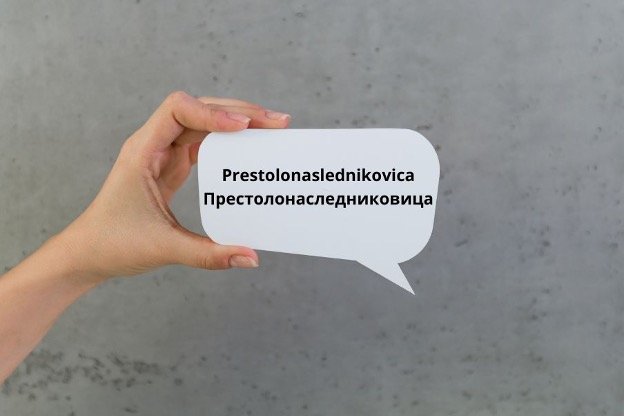
Pronunciation: /pre-sto-lo-nas-led-ni-ko-vi-ca/
This word is proof that Serbian doesn’t do simple family structures. If you’re not sure who’s who at a family gathering, welcome—you’ve arrived at a party where everyone has a title, but no one knows exactly what it means.
2. Otorinolaringologija (20 letters)
This refers to the medical speciality dealing with the ear, nose, and throat—also known as ENT (Ear, Nose, Throat) medicine.
Example sentence:
Upisao je specijalizaciju iz otorinolaringologije jer ga interesuje zdravlje uha, grla i nosa.
(He enrolled in a specialisation in otorhinolaryngology because he’s interested in the health of the ear, throat and nose.)
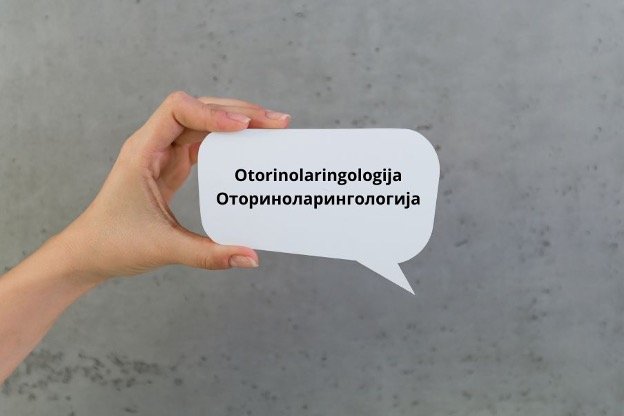
Pronunciation: /o-to-ri-no-la-rin-go-lo-gi-ja/
This one’s for those who like their medical degrees baked into the vocabulary. If you can say it fast, you’ve got real potential for hosting a Serbian-language medical podcast.
3. Antisamoupravnosocijalistički (27 letters)
This describes something opposed to self-managing socialism, a political and ideological term from the former Yugoslavia.
Example sentence:
Njegovi stavovi su ocenjeni kao antisamoupravnosocijalistički i nisu naišli na odobravanje komiteta.
(His views were deemed antisamoupravnosocijalistički and did not receive committee approval.)
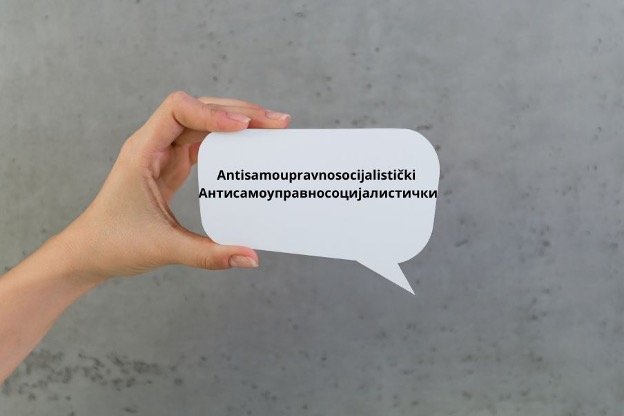
Pronunciation: /an-ti-sa-mou-prav-no-so-ci-ja-li-stič-ki/
Bonus points if you can say this in one breath—most native speakers would need a second try.
4. Dvadesetdevetogodišnjakinja (26 letters)
This refers to a 29-year-old woman.
Example sentence:
Dvadesetdevetogodišnjakinja iz Beograda pokrenula je uspešan startap za izradu personalizovanih planera.
(A 29-year-old woman from Belgrade launched a successful startup making personalised planners.)
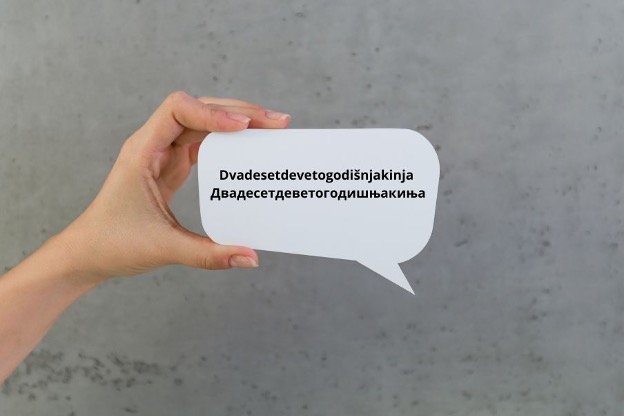
Pronunciation: /dva-de-set-de-ve-to-go-di-šnja-ki-nja/
You might be wondering why we don’t just say “a woman who is 29.” The answer is: Serbians love to pack everything into one word. Convenient, right?
How to pronounce the longest Serbian words like a pro
- Break them into syllables
Serbian is a syllabic language—each syllable is clearly pronounced. Split the word into bite-sized chunks, like cutting up a stuffed cabbage roll so it doesn’t fall apart.
Example: otorinolaringologija → o-to-ri-no-la-rin-go-lo-gi-ja
- Find the rhythm—rap it out
Big words have a rhythm of their own. If it helps, try saying them in a beat. Serbian and rap? Surprisingly compatible.
- Practice in front of a mirror
Watch your face transform as you say prestolonaslednikovica. Bonus fun: challenge your fellow language learners to do the same.
Why learn such long Serbian words as a beginner?
You might be thinking: why bother with words I’ll never use in real life? But here’s the thing—within these long words lies the entire logic of the Serbian language. Word formation, declension, syntax—even history and culture—all bundled into one.
Think of them as the “boss levels” of the language. If you can beat these, daily phrases will feel like a stroll through Kalemegdan Park.
A Challenge for You: Practice Sentence
Try saying this out loud:
Dvadesetdevetogodišnjakinja je sa otorinolaringologom raspravljala o antisamoupravnosocijalističkim stavovima prestolonaslednikovice.
(The 29-year-old woman was discussing the antiself-managing-socialist views of the heir’s daughter-in-law with the ENT specialist.)
If you nailed it—congratulations! Serbian is no longer a stranger to you, but a travel companion. And if you stopped halfway? Don’t worry—even native speakers would pause for breath.
Long words in Serbian are more than a curiosity—they’re a mirror of the language’s structure and a reflection of its soul. Understand them, and you’re not just learning vocabulary—you’re learning how Serbs think and speak.
And that’s already more than halfway to fluency.

