International Women’s Day on March 8 holds a special place in Serbia. Although it originated as a day of the struggle for women’s rights, today it represents a blend of tradition, attention, and social gathering. It is a holiday celebrated within families, workplaces, schools, and restaurants, with a focus on gratitude and small gestures that show respect.
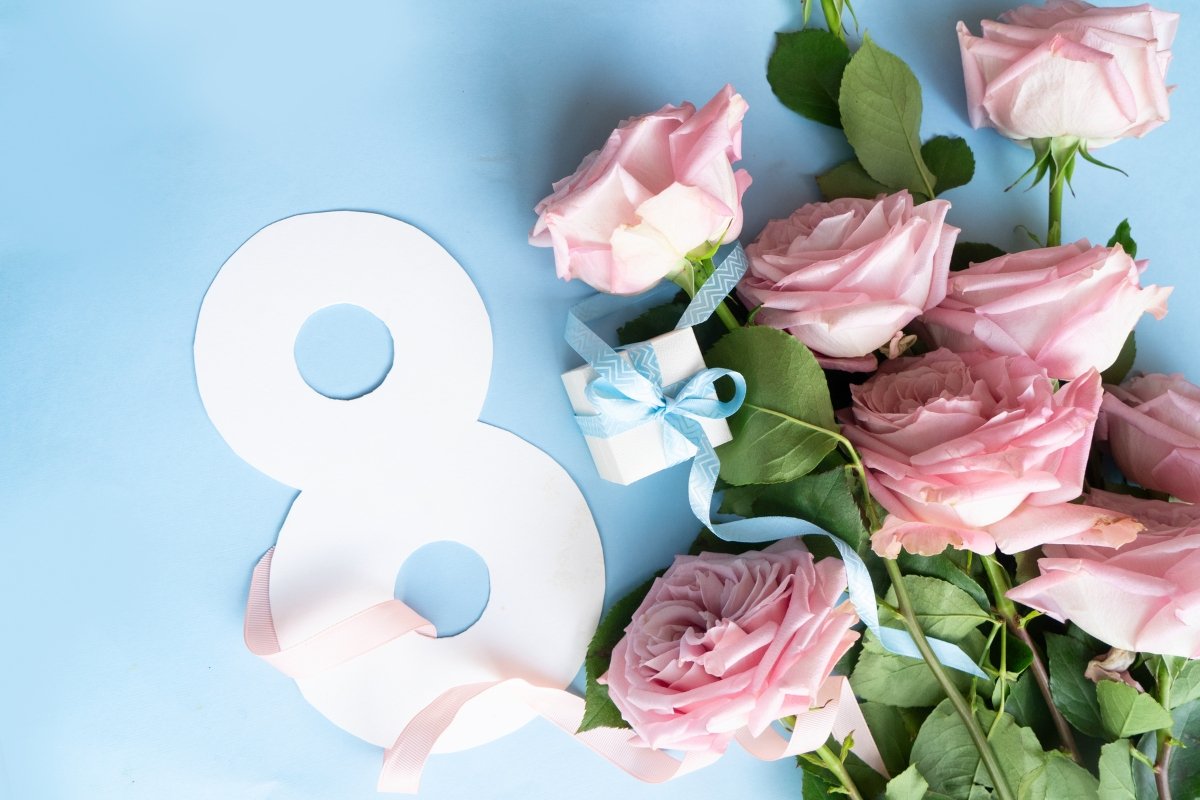
For many people in Serbia, March 8 is not just a symbolic date but a day to pause, give flowers, and spend time with the important women in their lives. Stay with us until the end of the article and get to know Serbia during International Women’s Day. Get ready to say “Srećan 8. Mart” in authentic Serbian and enjoy Women’s Day with Serbians.
What March 8 looks like in Serbia
The holiday atmosphere begins to take hold a few days earlier, though very few people actually prepare anything before the day itself. Flower shops are full, shop windows display gift sets, and restaurants offer special menus for Women’s Day, but decisions are often made at the last moment, which is why everything becomes fully booked that day.
Many companies organize small surprises for their female employees, such as flowers or cosmetic vouchers. Within every community, whether residential, educational, or otherwise, some pleasant surprise for women is usually arranged.
On the day itself:
• Flowers are given to mothers, partners, colleagues, and friends
• lunches and dinners are organized
• Workplaces often mark the day with gatherings
• Children in kindergartens and schools make gifts for mothers and grandmothers, and always bring a gift for their teachers
The holiday has both an informal and a ceremonial dimension, so it can be a small family gesture or a larger celebration. In general, everything that day is focused on women in Serbia. Every woman receives roses, gifts, hugs, and attention because Serbian people understand that this holiday matters to women and that the everyday contribution women make to the world is significant.
What is particularly interesting is that there are countless opportunities to shop and organize something, even if you have not prepared anything in advance. On city streets, street vendors sell flowers, handmade arrangements and bouquets, wooden crafts, hearts, and various gifts that can be purchased on the way home from work.
There are many possibilities to surprise someone dear without any prior preparation.
Typical gifts for March 8 in Serbia
The most recognizable gift in Serbia is flowers. A bouquet often carries symbolic value and represents attention rather than luxury.
The most common gifts include:
• roses
• tulips
• carnations, traditionally associated with the holiday
• chocolate
• perfume
• small cosmetic gifts
• handmade greeting cards
At workplaces, gifts are usually symbolic, while within families, they are more personal.
Children play a major role in organizing this holiday in Serbia because they spend days preparing cards, saving money, and choosing gifts for their mothers, grandmothers, and teachers. This is a special holiday for them because school activities teach them that mothers and women in general deserve attention and love every day.
Celebrating March 8 at work
In many companies, March 8 has a long tradition. Employers or colleagues often organize a shared lunch, cake, or refreshments in the office, or symbolic gifts for female colleagues. Usually, it is a small surprise waiting on employees’ desks in the form of a flower, a card, a lunch invitation, a voucher for cosmetic treatments, or shopping.
This custom dates back to socialist Yugoslavia and remains very present.
Family celebrations of March 8 in Serbia
For many women in Serbia, the most important part of the holiday comes from family. Children make drawings, partners plan dinner, and families spend time together.
It is especially common that:
• mothers receive flowers
• grandmothers are called or visited with a handmade gift made with care
• A family lunch is organized
• all women receive greetings by phone or in person
Because of all this, the holiday has a warm and emotional atmosphere.
Is March 8 more symbolic or social?
In Serbia it is both. There is awareness of the holiday’s historical meaning, but in everyday life, attention and gratitude are emphasized more.
Many people see it as a day when women receive recognition for their everyday work, when relationships are nurtured, when routines are paused, and when friendship among women is celebrated.
Serbian people are known for enjoying holidays, festive atmospheres, and celebrations, which is why every holiday, especially Women’s Day, is celebrated wholeheartedly.
How foreigners perceive March 8 in Serbia
Foreigners are often surprised by how visible the holiday is in public spaces. In some countries, March 8 passes almost unnoticed, while in Serbia it is very present.
They are especially surprised by:
• the amount of flowers in cities, squares, and on every corner
• celebrations at workplaces
• the generational tradition of the holiday
• the blend of formal and informal celebration
Foreigners find it interesting how much Women’s Day is cherished and how much attention it receives on March 8, when everything is directed toward women. They are often struck by how cities turn into floral spaces, how the entire day is dedicated to the holiday, and by the importance of women in society.
March 8 in Serbia shows how a holiday can retain its historical meaning while becoming part of everyday culture. It is not necessarily spectacular, but it is visible in small gestures, messages, and gatherings.
For that reason, Women’s Day in Serbia remains one of the holidays that is celebrated most consistently and for the longest time as a day of attention, gratitude, and togetherness.

