In Serbian culture, saying goodbye is far from a mere formality. It is a profoundly emotional moment, and the continuation of a relationship often depends on it.
If you want to understand Serbs, pay attention to how they say goodbye, because the way someone says “goodbye” in Serbia reveals a great deal about closeness, respect, temperament, and the soul of an entire nation.
Stay with us until the end of this text and learn how to say goodbye in Serbian, as well as all the other details related to parting from someone, because this will significantly help you understand Serbs, their temperament, and their way of expressing themselves in the Serbian language.
Why is saying goodbye so crucial to Serbs?
Serbs are a highly emotional people. They do not hide their feelings, whether positive or negative, whether you like them or not. That is why goodbyes are often experienced as a personal act, rather than simply ending a conversation and leaving someone.
Even when they know they will see each other the very next day, Serbs will often say goodbye warmly, using sentences that sound as if they are parting for a long time. You need to understand that this is not dramatization, but a way to show that the meeting was essential and that every subsequent encounter with you is a source of joy and pleasure.
Basic ways to say “goodbye” in Serbian
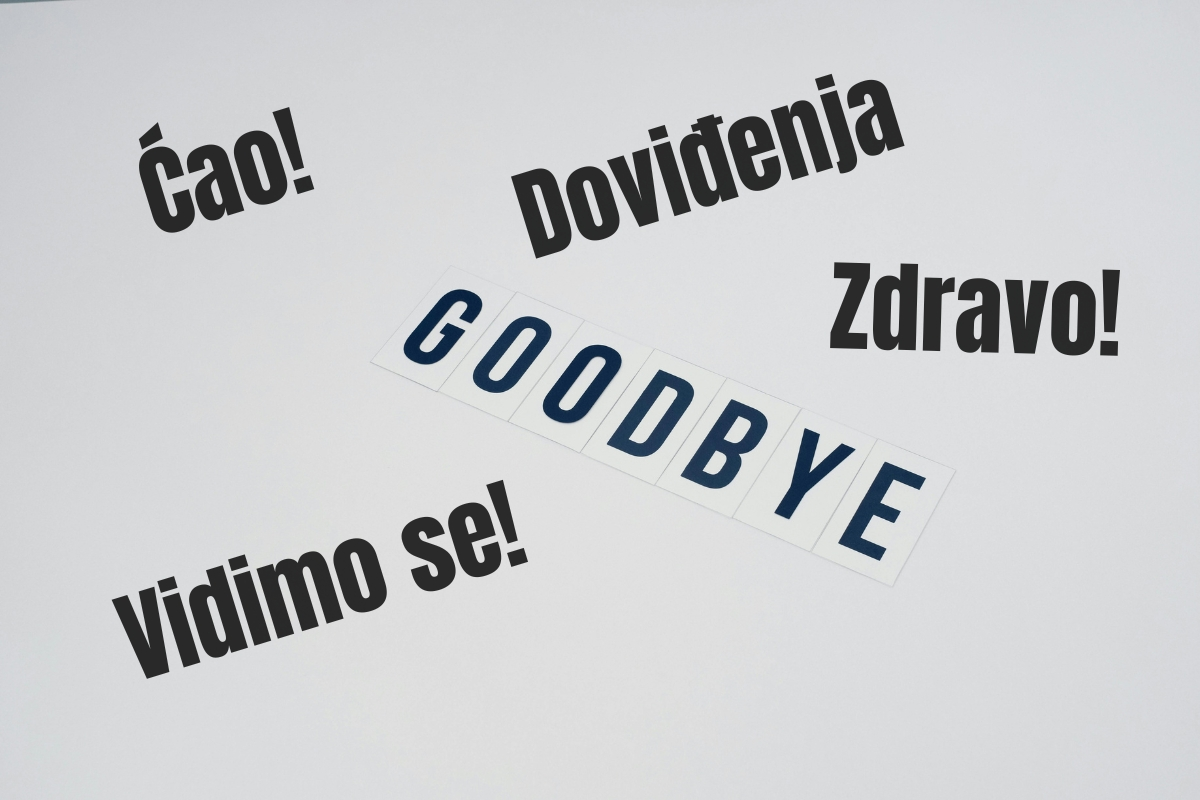
The most common phrases you will hear in the Serbian language are:
- Doviđenja – neutral and polite, used in both formal and informal situations, friendly and professional, everywhere
• Vidimo se (tomorrow, next week, in a month) – the most common everyday variant, announcing that this is only a temporary separation and that spending time together will continue soon
• Nadam se da se vidimo uskoro – this expression differs from the previous one because the person cannot be specific when the next meeting will take place, but it is essential to convey closeness and hope that you will see each other again soon
• Ćao – friendly and relaxed, often used both when arriving and when leaving, among familiar people
• Zbogom – a powerful word, used rarely, usually when the separation is experienced as final
When it comes to Serbs, it is essential to know that the word “zbogom” should not be used lightly. For Serbs, this word carries substantial emotional weight and often sounds overly dramatic if used in everyday situations.
This word is used only when you know that you will never see someone again. That is how powerful this word is for Serbs. They use it only when ending romantic relationships, when they are deeply hurt, or when they are truly saying goodbye to a loved one forever.

How do Serbs really say goodbye in everyday situations?
In reality, saying goodbye in Serbia rarely lasts just one sentence. It often looks like this:
- the conversation ends
• everyone stands up
• Two or three more sentences are exchanged
• someone remembers something else “important.”
• the goodbye is repeated
Then someone shouts that they must go for coffee soon, and then, by the elevator or the door, there is more waving and another farewell phrase.
This prolonging of the farewell should never be understood as indecision. You should know that this is a sign of respect and a desire to nicely round off the meeting, that people feel comfortable with you, and that they are postponing your departure because they enjoyed your company.
Physical contact and body language of Serbs when saying goodbye
Serbs are a people who are not afraid of closeness. Depending on the relationship, saying goodbye may include:
- a handshake
• a hug
• a kiss on the cheek (necessarily three times, the Serbian way, especially among close people)
If you are not sure what is appropriate, follow the other person. Serbs value natural behavior more than perfect form. They will be delighted if you participate and behave “the Serbian way”, naturally and spontaneously.
What else do Serbs say when saying goodbye to someone?
In addition to simply saying goodbye, Serbs often add sentences that show care and concern:
- Take care
• Let me know when you arrive
• Have a safe trip
• Take this for the road
• Let me hug you one more time
• We will see each other, for sure
These phrases are not empty. They mean that the relationship is essential and that continued contact is expected. Do not be surprised if they pack you twenty sandwiches for the road, a jar of ajvar, jam, a bottle of rakija, woolen socks, and homemade cakes, along with these farewell sentences.
What do Serbs appreciate and what do they dislike when saying goodbye?
Serbs appreciate:
- sincerity
• warmth
• eye contact
• a heartfelt farewell
They do not like:
- a cold, mechanical “bye”, because they immediately think you are dissatisfied with something or offended
• rushing off without explanation and leaving abruptly
• ignoring the farewell, when you stand up and leave as if the meeting meant nothing to you
If you have to leave quickly, it is enough to say so in a few words, because Serbs understand circumstances. Still, they appreciate an explanation, since they entered the conversation with you sincerely and openly.
For Serbs, saying goodbye is not the end of seeing each other, but a confirmation of a bond and a promise that spending time together will continue.
With all these sentences and gestures, Serbs are telling you: it mattered to me that we saw each other.
That is why, the next time you say “doviđenja” in Serbian, remember that you are not just saying a word, but taking part in a small cultural ritual that connects emotion, respect, and human closeness.
If you understand how Serbs say goodbye, you have already taken a big step toward understanding their soul.

